
Towson · Parkville
Cabinet Quotes in Catonsville, MD
Bring your project details together before considering a cabinet purchase.
Send my cabinet inquiry
Or call (562) 203-3232. Calls only, we do not receive text messages.
A cabinet purchase in Catonsville should begin with the room you have, not a standard arrangement copied from another house. Baltimore Cabinet Ledger helps buyers organize cabinet dimensions, door clearance and the finished edges that a product offer needs to explain. Existing openings and trim can be important questions without being evidence that every local property has the same constraints.
- Independent buying guidance
- Product inquiries
- Seller availability confirmed separately
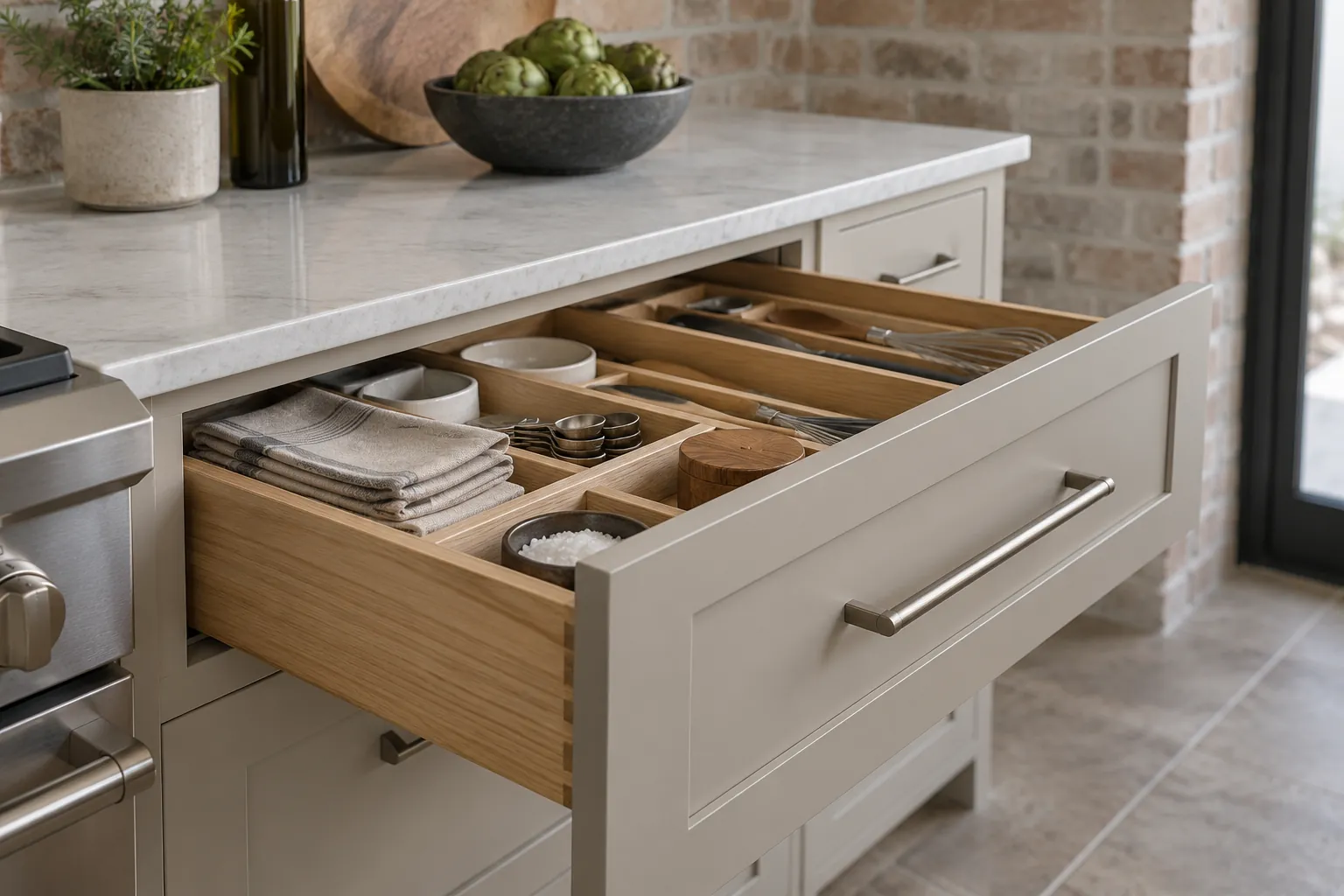
Cabinet purchase preparation in Catonsville
The Old Catonsville historic inventory documents detached houses, duplexes and several architectural forms. Those facts offer context, not a diagnosis of your home or a determination of required approvals. Prepare a measured room brief, identify who will verify it and ask an accepting seller to quote the products and conditions actually needed for your purchase.
About Baltimore Cabinet Ledger
Know who handles each part
Independent cabinet buying information and quote-request service. We do not manufacture, stock or install cabinets. A referral, supplier response, appointment or purchase is not guaranteed. Product availability, delivery and installation must be confirmed directly with the seller or separately engaged contractor.
Survey the existing room before selecting a replacement
Record the room's available wall runs and openings without correcting their shape to match an idealized plan. Show windows, room doors, fixed utilities and changes in wall depth. If existing trim will remain, include the relevant details in photographs and ask the responsible reviewer whether they affect the proposal. A drawing should communicate the room's questions, not conceal them behind a tidy arrangement.
Separate measurements you can confirm from information that is only approximate. Note who gathered each figure and which areas were inaccessible. A provisional sketch can support an initial product discussion, but a seller needs to know whether it has been accepted as the final order basis. Ask the person responsible for field verification to identify what must be checked before a purchase is approved.
Use the property itself to decide which checks matter. An existing feature may need to be accommodated, removed or reviewed by another project party. The official historic inventory does not establish those conditions at an individual address. Do not order around a presumed local house pattern; explain the actual room and obtain the necessary product and professional information.
Describe the boundary between new products and retained features
Make a list of what stays and what changes. Existing flooring, adjoining finishes, appliances or trim may influence the intended appearance and sequence of work. Tell the prospective seller which elements must be coordinated with the proposed products. If a retained item has an uncertain specification, keep it open for review rather than assuming the new selection will match it automatically.
Ask how the proposed line treats exposed ends and transitions beside walls or existing materials. Fillers and trim should be chosen from the actual arrangement, not added only after the main boxes have been priced. Identify which components belong to the seller's product offer and which involve another business. A complete boundary description makes the quote easier to understand and reduces ambiguity about unfinished edges.
Where a project includes changes outside the interior product purchase, ask the relevant professional or authority about the specific scope. A historic district listing by itself does not settle local regulatory obligations. This guide offers neither an approval requirement nor an exemption. The buyer should obtain property specific answers instead of translating general architectural context into a construction instruction.

Compare cost for the room you are actually keeping
Request an itemized price on the selected layout, including finishes, quantities, required ends and trim. If the seller offers a different arrangement, ask it to identify what changes from your request. A quote that appears lower may have removed a product needed to meet the retained features, or it may include a different configuration that needs further review.
Clarify assembly and receiving costs, and ask whether any seller measurement or planning service is included. The independently arranged work around retained surfaces should have its own stated scope and price from the responsible party. No Catonsville price range is given here because room conditions, products and accepted businesses have not been verified. Ask for actual written offers rather than a general project number.
For a possible alternate, compare its practical consequence as well as its amount. A different depth or storage arrangement might affect the remaining room, while a finish change could affect the treatment of adjacent materials. Have the final layout reviewer assess that consequence before purchase. An alternative is useful when the buyer understands what is different and why it is acceptable.
Evaluate product passage separately from final fit
A unit can suit the proposed layout while still presenting a handling question on the way to the room. Follow the route through the actual entrance, turns and interior openings. Request the package and finished dimensions of larger products and describe the route to the responsible receiver. A house type in a district inventory cannot supply those measurements.
If you compare RTA with assembled products, include both the receiving route and the work area needed by the actual instructions. Ask who will assemble the chosen items and how they will be checked. A compact carton can be helpful for one part of the route without settling assembly capability or storage conditions. The format decision should reflect the actual sequence of tasks.
Clarify how the seller's service connects to your arrangement. Ask where delivery ends, who inspects the shipment and what documentation is needed for reporting an issue. Keep order labels and the accepted schedule available to that person. Separately agreed installation remains a different responsibility; do not assume the product supplier manages it simply because both activities concern the same room.
Prepare a Catonsville request with a traceable specification
State the project locality, room type and information already checked. Describe retained features that may matter and the question you need a seller to answer. If the desired next step is a discussion of possible configurations, say that rather than presenting a preliminary drawing as a purchase instruction. An accurate planning stage gives a potential referral more useful context.
Keep the accepted drawing version linked to the final item list. Record approved differences in finish, dimensions or configuration, and ask the seller how it handles substitutions after acceptance. Obtain its payment, cancellation, return and written warranty documents for the proposed purchase. Those conditions belong to an actual seller, not to the general guidance on this page.
A referral is possible only when a suitable business accepts the request and location. The presence of a Catonsville page does not promise fulfillment at every address. Confirm the seller's identity and responsibilities directly, while separately confirming the professionals who check measurements and related work. A coherent room record and purchase schedule help those conversations stay specific without inventing a local project history.
Inquiry process
From buying questions to a possible supplier quote
Sending an inquiry does not reserve products or book work.
Describe the purchase
Include project ZIP, room, approximate cabinet list and preferred timing.
Clarify requirements
Identify assembly, access, measurements and any separately arranged labor.
Confirm referral availability
An inquiry can be referred only if a suitable seller accepts the location and product request.
Review seller terms
Confirm the final drawing, itemized price, payment, delivery and return terms directly before ordering.
Illustrative product choices
Illustrative product visualizations, not completed work, local properties or supplier facilities.
Questions
Catonsville Questions
Does local historic context mean my room is nonstandard?
No. The official inventory describes a district and its documented buildings, not every Catonsville property or kitchen. Use the actual room survey to identify any issue with openings, walls or retained features. The layout and order should respond to verified conditions instead of a general architectural assumption.
Should fillers be considered before a product quote?
Ask the seller and responsible layout reviewer how the actual arrangement treats transitions and openings. Relevant fillers or finishing components should be identifiable in the proposed item list. Their need and specification depend on the room and product system, not simply on the age or style of a house.
Can the existing countertop remain with a new order?
Treat that as a question for the professionals responsible for the proposed work and the product interfaces. Describe the existing material and arrangement, then obtain a specific assessment before relying on it. This website does not verify compatibility or promise that a retained component can be reused.
What helps a seller assess an irregular opening?
Provide a clear drawing, relevant photographs and the status of the measurements. Explain what is irregular and who will verify the final dimensions. A seller can then identify which product information or additional review it needs. Do not convert an approximate observation into an approved order measurement without that review.
Talk to us about your project in Catonsville
Describe the purchase and project ZIP in Baltimore. Supplier acceptance and any referral are confirmed separately; no visit or quote is booked by this form.
Calls only, we do not receive text messages.