
Kitchen Cabinet Quotes in Baltimore, MD
Prepare a cabinet list and compare what each kitchen quote includes.
Send my cabinet inquiry
Or call (562) 203-3232. Calls only, we do not receive text messages.
Two kitchen cabinet quotes can describe the same Baltimore room while pricing different purchases. Baltimore Cabinet Ledger explains how to read the item list, included finishes and excluded work before judging the totals. An itemized quote tied to a dated drawing is a better comparison tool than a promotional kitchen image or an approximate length of wall.
- Independent buying guidance
- Product inquiries
- Seller availability confirmed separately

Buying questions: kitchen cabinet quote comparison
Use the first offer to discover missing decisions, then return a clearer brief to every seller you are considering. This independent request channel does not issue a binding product offer or guarantee a referral. An accepting supplier must confirm the specifications, price and purchasing conditions directly, with separately engaged professionals responsible for their own services.
About Baltimore Cabinet Ledger
Know who handles each part
Independent cabinet buying information and quote-request service. We do not manufacture, stock or install cabinets. A referral, supplier response, appointment or purchase is not guaranteed. Product availability, delivery and installation must be confirmed directly with the seller or separately engaged contractor.
Define the same purchase for every comparison
Begin with a reference packet that all prospective sellers can identify. Give the drawing a date or revision label, list the chosen appliance models and describe the preferred finish without calling it final until a product has been selected. If the sink position or tall storage arrangement remains undecided, name that uncertainty. A comparison loses meaning when one offer assumes a settled layout while another allows for a major change.
Ask each seller to distinguish the product schedule from the room illustration. An illustration may show a continuous appearance without exposing every filler, end treatment or supporting component. The schedule should identify what can be ordered, in what quantity, and how it relates to the layout. If item codes use unfamiliar abbreviations, request a legend rather than guessing from the picture.
Create a question column next to the schedule. Mark unclear quantities, unexplained finish differences and items described only as miscellaneous. Resolving those lines can be more valuable than negotiating the headline amount immediately. Keep a record of the seller's answer and whether it changes the quote. The goal is a defined purchase that another responsible person could understand without repeating the original sales conversation.
Compare construction and fittings at the item level
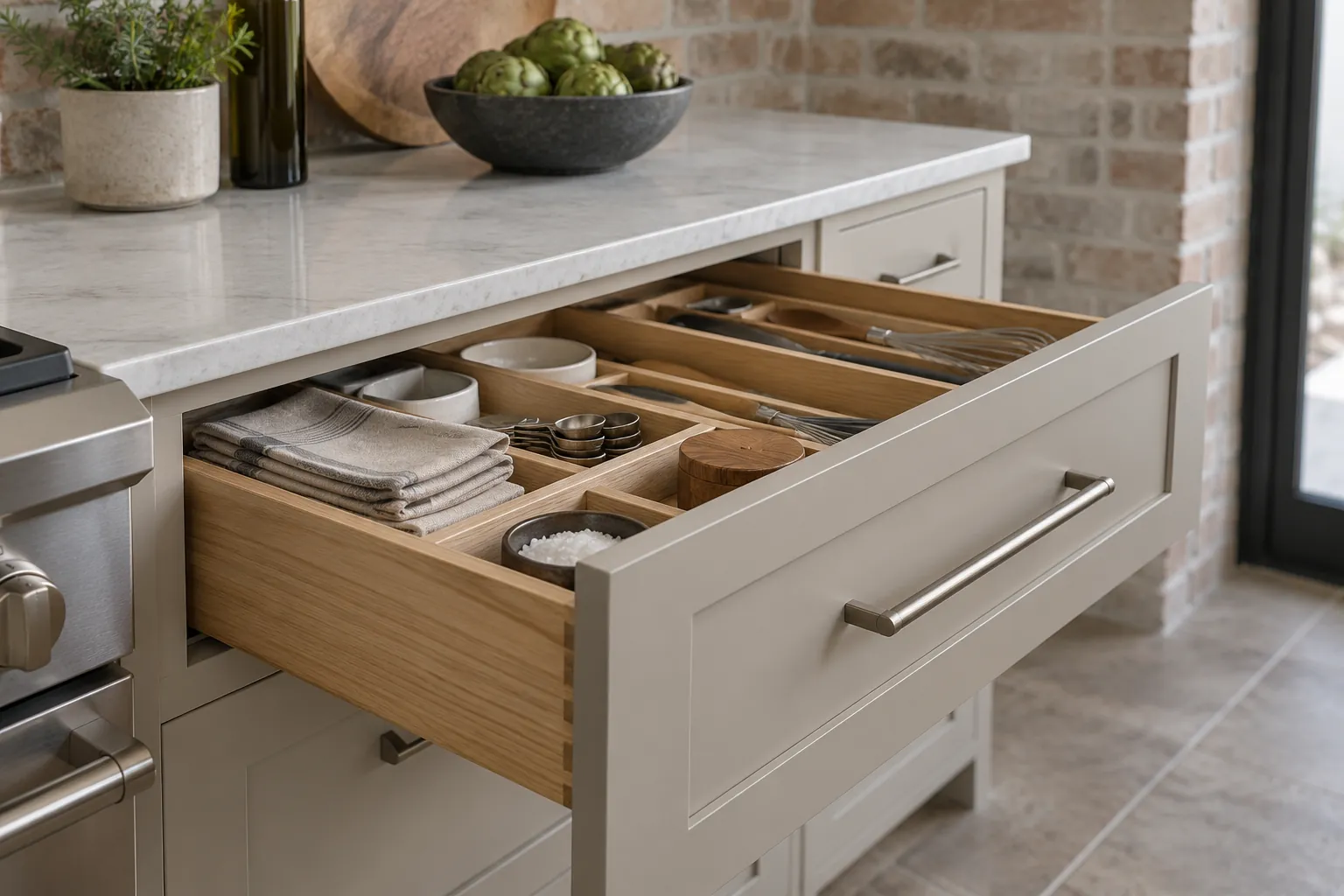
Product names alone do not describe all the components you receive. Ask about the box construction, door material, drawer arrangement, hinge and slide specifications, and the intended treatment of exposed surfaces. Have the seller explain which features belong to the selected line and which are optional. Do not presume that two similar door photographs represent the same construction or included hardware.
Look closely at units that serve a specific task. A waste pullout needs a compatible base and clearly described fittings; a drawer intended for cookware should be evaluated against what you plan to store. A tall unit may have different interior configurations despite a shared exterior size. Confirm the proposed configuration by its product documentation and item code, not an informal description such as the larger pantry.
Request a finish sample or another seller approved way to assess appearance before a final selection. Screen images can be useful for narrowing ideas, but they do not resolve how a particular surface looks beside existing materials. Ask whether exposed ends, trim and additional pieces belong to the same finish program. Record accepted differences explicitly so that an unexpected variation is not discovered only when the pieces are unpacked.
Find the price differences that change your decision
Price can move because of quantities, door style, finish, drawer count, accessories and the chosen product line. It can also move because the offer includes more of the complete room. Separate a genuine specification difference from an omitted component before choosing the lower total. A missing filler, finished end or required trim item may create another purchase rather than an actual saving.
Ask for distinct amounts or clearly stated inclusions for assembly, transport, special handling and any seller provided planning or measurement service. Identify taxes and other applicable fees. Installation, plumbing, electrical changes, surface preparation and countertops are separate responsibilities unless an actual written agreement says otherwise. This guide supplies no price range because neither a verified seller offer nor your final product list has been established.
For alternatives, request a revised schedule that shows what changed. Replacing a drawer unit with a door unit may affect daily use; selecting a different finish may affect the availability of matching pieces. Compare the consequence alongside the price difference. An alternative is useful when you can explain why you would prefer it, not merely when it reduces an unexplained room total.
Read purchasing conditions before accepting the amount
A clear product price still needs clear terms. Ask when the offer expires, what must be approved before ordering, how payment is handled and whether a change can be made after acceptance. Obtain the seller's cancellation and return conditions for the specific products being considered. Do not assume a general store policy applies identically to every assembled, altered or specially selected item.
Ask what happens if a listed component cannot be supplied as quoted. Identify whether the seller seeks written approval for a substitution, updates the drawing and changes the total. A substitute can affect fit, finish or hardware compatibility even when its description sounds similar. Have the responsible layout reviewer confirm any consequence before you accept a replacement item.
For written warranty information, find out which business provides the document and what instructions apply to a claim. Separate an initial delivery discrepancy from a later product issue. The reporting process, required evidence and responsible contact should be understandable before payment. Keep the accepted schedule, final drawing and terms together so that the order can be checked against a single agreed record.

Turn the first quote into a controlled decision
Read an initial offer slowly and write questions beside the relevant lines. One group may concern incomplete specifications, another the receiving arrangements, and another work outside the seller's scope. Send those questions as an organized list. A focused response lets you compare sellers more fairly than repeatedly changing selections in separate conversations without updating the reference packet.
Before committing, ask the person responsible for the final measurement or installation plan to review the approved products. A seller may price a list accurately while relying on dimensions supplied by someone else. Confirm that person's responsibility directly and avoid treating a product quote as evidence the room has been checked. This matters whether the Baltimore project is in a house, an apartment or a managed building.
If you use the inquiry form, describe the room, project location and information already prepared. Explain whether the next useful step is a preliminary product discussion or a quote on an approved schedule. Sending the request does not hold inventory or secure a business relationship. A referral, if available, gives you a possible seller to question; the actual purchase still depends on that seller accepting the requirements and your agreement to its terms.
Inquiry process
From buying questions to a possible supplier quote
Sending an inquiry does not reserve products or book work.
Describe the purchase
Include project ZIP, room, approximate cabinet list and preferred timing.
Clarify requirements
Identify assembly, access, measurements and any separately arranged labor.
Confirm referral availability
An inquiry can be referred only if a suitable seller accepts the location and product request.
Review seller terms
Confirm the final drawing, itemized price, payment, delivery and return terms directly before ordering.
Illustrative product choices
Illustrative product visualizations, not completed work, local properties or supplier facilities.
Local buying information
Local inquiry guides
Questions
Kitchen Cabinet Quote Comparison: Common Questions
Can a per length figure tell me which quote is cheaper?
It can be a rough discussion aid, but it does not identify the actual boxes, drawer arrangements, finish pieces or services included. Compare complete item schedules for your room before treating different totals as equivalent. Ask which assumptions sit behind any simplified figure and whether your selected configuration changes them.
What if a seller uses different product codes?
Ask for descriptions, dimensions and a clear link between each item and the drawing. Build a comparison around function and specifications rather than trying to force unrelated codes to match. A seller should identify any configuration that differs from your reference request so that you can consider its practical consequences.
Should I approve a quote while appliances are undecided?
Keep the unresolved appliances visible in the document and ask which decisions must be finalized before ordering. The responsible layout professional and product seller need the applicable specifications. An early estimate may help planning, but it should not silently become an approved fit for models that have not been chosen.
Will submitting my list produce a firm Baltimore offer?
A firm offer cannot be promised by this information service. A suitable seller must first accept the location, product request and information provided. Describe the planning stage accurately, then review any resulting offer directly with that business. Quote acceptance and the supply contract are separate from sending an inquiry.
Talk to us about kitchen cabinet quote comparison
Describe the purchase and project ZIP in Baltimore. Supplier acceptance and any referral are confirmed separately; no visit or quote is booked by this form.
Calls only, we do not receive text messages.